
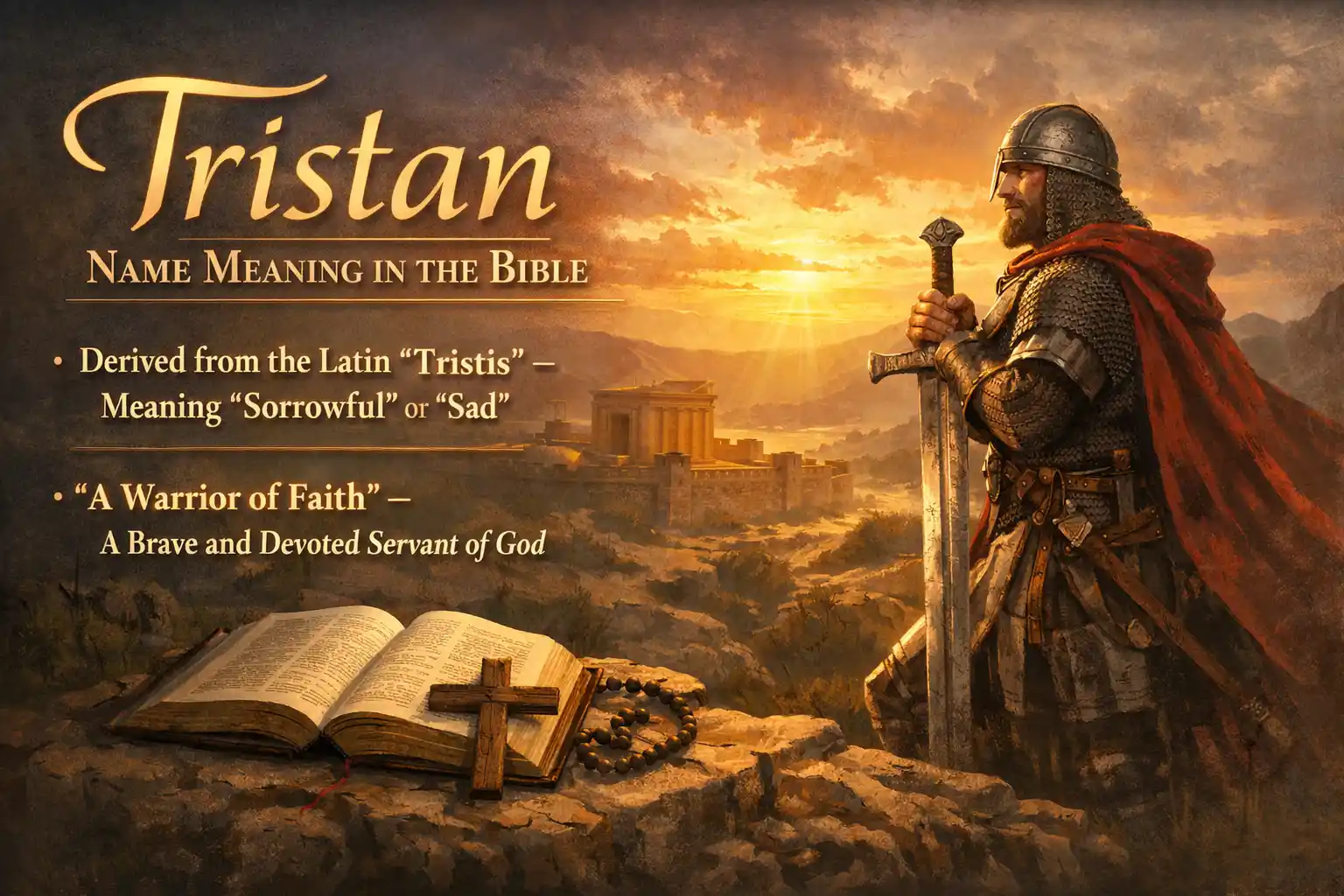
Some names carry elegance, while others hold deep purpose. Tristan does both beautifully. It evokes feelings of sadness yet speaks of inner power. Even though the name Tristan does not appear directly in the Bible, its spiritual interpretation connects strongly with ideas of belief, grief, salvation, and God’s plan during difficult times.
For English learners or parents seeking names rich in faith value, exploring the Tristan meaning in Bible reveals important lessons about courage, reliance on God, and renewal. Let’s dive into how this enduring name links to biblical wisdom about names and the powerful symbolism it carries for believers today.
Is Tristan Mentioned in the Bible?
The name Tristan is not found anywhere in the Bible. No character in Scripture bears this name. However, its spiritual symbolism connects closely with Christian teachings on grief, endurance, and God-given hope.
Throughout the Bible, countless people faced hardship and loss before experiencing triumph. This same truth appears in the Tristan Christian interpretation: God’s promises during pain lead to fresh strength and renewal.
Key takeaway:
- Tristan is not a biblical name, but it mirrors biblical themes of sorrow and redemption.
- It encourages believers that faith brings restoration even when everything seems shattered.
Tristan in the Bible: Biblical Significance and Spiritual Insights
Even without a direct mention, the Tristan symbolism in Scripture captures the believer’s path from sadness to grace. Seen through the eyes of faith, the name stands for turning grief into power and hardship into meaningful purpose.
Here is a clear breakdown of Tristan’s spiritual meaning and how it aligns with biblical truths about resilience and trust.
| Aspect | Explanation |
|---|---|
| Name Origin & Meaning | Rooted in the Latin term Tristis (“sorrowful”). It represents sadness changed into godly power. |
| Biblical Connection | Echoes verses such as Psalm 30:5 — “Weeping may last for the night, but joy comes in the morning.” |
| Spiritual Symbolism | Shows change — moving from grief and faith toward hope and salvation. |
| Moral Lesson | God uses challenges to shape character (Romans 5:3–4). |
| Faith Application | Motivates believers to rely on God in tough seasons. |
| Christ-Centered Insight | Mirrors Jesus’ suffering in Isaiah 53:3, showing that sorrow opens the door to salvation. |
| Spiritual Encouragement | Captures the promise in Psalm 30:11 — turning “mourning into dancing.” |
This table proves that Tristan goes beyond a simple name. It serves as a powerful reminder of faith restoration stories and God’s purpose even in suffering.
Origin and Etymology of Tristan
The Tristan name origin combines ancient sources and rich layers of meaning. Knowing its roots adds depth to its spiritual significance.
Latin — “Tristis” (Sorrowful)
The Latin foundation Tristis means sad or sorrowful. It reflects honest emotion and human weakness. In Christian symbolism, sorrow often points to repentance and humility — qualities God values greatly. This root reminds believers that bringing pain honestly before God opens the way to healing and new life.
Faith insight:
- Sorrow helps build compassion and sharper spiritual insight.
- Through God’s promises in pain, sadness becomes a tool for real growth.
Celtic — Drustan / Trystan (Boldness, Tumult)
The Celtic side adds courage. “Drustan” or “Trystan” means bold or full of tumult, like a warrior’s power. This blend of sadness and bravery matches how the Bible describes faith: facing pain yet standing firm.
Similar to Job’s trials or David’s sorrowful psalms, Tristan shows that faith strengthens through difficulty. It combines inner feeling (Latin root) with outer boldness (Celtic root), highlighting Christian moral lessons from names and the refining power of faith tested by fire.
Bible Verses That Reflect Tristan’s Meaning
Although Tristan is not named in Scripture, many Bible verses about sorrow and hope perfectly capture its spirit. These passages prove that God turns pain into purpose for those who trust Him.
Romans 8:18 (NIV) “I consider that our present sufferings are not worth comparing with the glory that will be revealed in us.”
Lesson: Hard times prepare us for greater glory, exactly like the Tristan meaning of endurance and future hope.
James 1:12 (NIV) “Blessed is the one who perseveres under trial… they will receive the crown of life.”
Lesson: Challenges create strength. Tristan stands as a symbol of this biblical lesson on endurance.
Job 1:21 (NIV) “The Lord gave and the Lord has taken away; may the name of the Lord be praised.”
Lesson: Even during loss, faith stays steady. Tristan reflects this unshakable trust.
Psalm 34:18 (NIV) “The Lord is close to the brokenhearted and saves those who are crushed in spirit.”
Lesson: God draws near to those hurting, offering redemption and restoration in faith.
Isaiah 53:3 (NIV) “He was despised and rejected — a man of suffering, familiar with pain.”
Lesson: Even Jesus experienced sorrow, turning it into spiritual growth through suffering.
Summary of This Section
These verses capture the Tristan Christian interpretation: life’s toughest moments can lead to divine change. Every passage ties together faith, sorrow, and strength, confirming that God’s promises never fail. They show that every trial carries hope — the very heart of what the name Tristan represents.
Spiritual Symbolism of the Name Tristan
The spiritual symbolism of Tristan centers on moving from brokenness to belief and from despair to divine trust. Each layer offers lessons on courage and renewal in the Christian life.
Sorrow → Strength
Sorrow can feel overwhelming, yet faith turns weakness into power. Tristan represents this shift — turning grief into grace. Just as God restored Job after his trials, today’s believers discover hope in hard times.
Quick takeaway:
- Sorrow builds lasting resilience.
- Every tear can become a powerful testimony through faith.
- Christian baby names like Tristan carry this message of hope.
Trials → Trust
Faith grows strongest in storms. Tristan encourages us to trust God during trials, knowing His plan brings peace. Romans 5:3–4 explains that suffering produces perseverance, character, and hope — the very core of Tristan’s meaning.
When we endure hardship, trust replaces fear. This is the heart of spiritual growth through suffering.
Pain → Purpose
Pain is never wasted in God’s hands. Tristan mirrors this truth — God turns wounds into wisdom. Like David’s honest psalms, our struggles can lead to deeper insight and hope after pain (biblical meaning).
Use this reflection:
- Pain teaches true empathy.
- Purpose emerges when we surrender our story to God.
- Faith turns loss into lasting legacy.
Faith → Restoration
Faith rebuilds what life breaks. The Tristan meaning in Bible shines brightest here, proving belief restores the soul. Psalm 30:11 declares, “You turned my mourning into dancing,” showing redemption and restoration in faith become real.
Faith does not erase pain — it redeems it. That is the beautiful message Tristan carries: hope rising from every hardship.
Is It a Good Christian Name?
Yes, Tristan is an excellent and good Christian name. Although not directly from Scripture, its values line up perfectly with biblical meaning of strength, endurance, and redemption. Many parents choosing Christian baby names want ones that inspire faith — and Tristan does exactly that.
Why Tristan stands out:
- Reflects sorrow and strength in faith.
- Symbolizes trust and restoration.
- Represents God’s purpose through trials.
Choosing this name honors hope through hardship and faith over fear, making it one of the most meaningful options for believers.
Tristan in Legends vs Christian Truth
The classic Tristan and Isolde legend tells a story of tragic love and deep sorrow. While moving and poetic, it focuses more on human feelings than divine purpose. Christian truth, however, redefines sorrow with hope, redemption, and faith.
| Legend of Tristan | Christian View of Tristan |
|---|---|
| Love guided by passion and fate | Love rooted in sacrifice and divine purpose |
| Sorrow leads to tragedy | Sorrow leads to restoration and faith |
| Fate rules destiny | God’s plan governs life |
| Temporary emotion | Eternal truth and redemption |
This side-by-side view shows how the Christian interpretation transforms meaning. Instead of ending in despair, Tristan becomes a name of courage and renewal — a true symbol of biblical hope and spiritual growth.
Conclusion
The name Tristan, even though absent from Scripture, beautifully reflects core biblical principles. Its roots in sorrow and courage mirror the faith journey every believer walks.
Through biblical insights about names, we learn that the Tristan meaning in Bible teaches endurance, compassion, and complete trust in God.
In essence:
- Sorrow → Strength
- Trials → Trust
- Pain → Purpose
- Faith → Restoration
The spiritual symbolism of Tristan reminds us that God’s promises never fail. For anyone looking for a Christian baby name with deep meaning, Tristan stands as proof that faith overcomes sorrow and turns every struggle into spiritual victory.
FAQ’s
What is the meaning of Tristan in the Bible?
Tristan does not appear directly in Scripture, yet it symbolizes sorrow transforming into strength and reflects faith tested through trials.
What is the meaning of Tristan?
The name Tristan means “sorrowful” or “full of sadness,” but spiritually it points to hope, endurance, and divine renewal.
Is the name Tristan good?
Yes, Tristan is an outstanding choice — it embodies resilience, compassion, and strong faith, making it highly meaningful for Christian families.
Does Tristan mean brave?
From its Celtic roots, Tristan links to “bold” or “tumult,” representing bravery strengthened by emotional depth.
What is the Tristan meaning in Bible verse context?
Spiritually, it connects to verses like Romans 5:3–4, illustrating how trials produce perseverance, character, and lasting hope.
What is the Tristan meaning in Greek?
No direct Greek equivalent exists, but its essence matches the Greek concept of pathos — enduring deep emotion with strength.
What is the Tristan meaning in Hebrew?
In Hebrew perspective, Tristan echoes “ka’as” (sorrow) that changes into “tikvah” (hope) — a complete journey of faith.
What does the name Tristan say about personality?
People named Tristan often display empathy, courage, and emotional richness, turning personal pain into spiritual wisdom.
How is Tristan pronounced in the Bible context?
It is pronounced TRIS-tən, with a soft, humble sound that ties beautifully to themes of faith and endurance.
What is the Tristan meaning in Bible Catholic interpretation?
In Catholic understanding, Tristan represents redemptive sorrow — the truth that pain opens the path to deeper spiritual healing and restoration.
What is the Tristan meaning in Hindi?
In Hindi (त्रिस्टन), it translates to “dukh bhara” (filled with sorrow) but spiritually guides toward inner healing and renewed strength.